
Ep. 034: Terry Real - Building Peace: From the Intimate to the Global
What’s the connection between what happens between people in their intimate relationships and what’s happening on the global stage? In this conversation with Susan, Terry Real makes those connections – clearly, powerfully and with huge insight.
Terry is a nationally recognized family therapist, author and teacher in the United States. He's particularly known for his groundbreaking work on men and male psychology as well as his work on gender and couples. He's been in private practice for over 25 years and has appeared often as a relationship expert on popular shows in the United States like Good Morning America, ABC News, media venues such as Oprah 2020, The Today Show, CNN, The New York Times, you name it.
A statement that Susan most associates with Terry is “to walk into intimacy, men and women must walk out of patriarchy.” And his unorthodox approach to couples’ therapy, which is essentially mediation at the intimate level, is “ whenever I have a woman who's in trouble in a couple, my first move is to empower the woman, and whenever I have a man in trouble in the couple, my first move is to empower the woman.” “Women's voices”, he believes, “are the voices that will be the wedge into patriarchy. Men will catch up, but women will lead the charge.” This is a powerful metaphor for why Susan believes that empowering women, and getting gender right on the planet, is the most impactful peacebuilding initiative we can undertake.
When Susan asks Terry to make the links between the intimate and the global, he says “it is dead easy, it's about the basic mistake of patriarchy which is also known as dominion. The essential mistake of patriarchy is that as a man -- and patriarchy is masculinity writ large -- you are to be in control, you are above nature, you are Lord and Master, whether you are above the nature of your child, above the nature of your own vulnerabilities or nature as embodied by your wife, or mother nature.”
He also goes on to say that masculinity is basically at war with itself between the old model, the patriarchal model, and the new model, what he calls an ecological model, emerging especially among millennial men. He says that “the shift from a dominion model to a collaborative model, or the shift from a patriarchal model to a democratic model, is that you move out of the hubris, the pride, the delusion that you are above nature, and standing above the system, whatever that system is: your marriage your family your planet. You're not standing above this system, you're in it; you are a subcomponent part of it and you have to move inside the system effectively with the humility and clear perception of where you are in it.”
Powerfully he says, "the delusion of dominance is lethal. . . Let me say that again because I conclude many of my talks this way: we will move beyond patriarchy or we will die. It's that simple."
And addressing women, Terry says "Women are up to their eyeballs with co-dependency whether it's mothers tearfully and pridefully sending their sons off to war or women voting for Trump in the United States and places like that". He says that “whenever he has a woman who fears that speaking truth to power will have repercussions. . . I will never dismiss or pathologize these concerns because guess what, there are consequences. . . but ultimately you should do it anyway . . .because life is better when we speak up. . . when you have congruence inside your skin.”
He goes on to quote his friend Carol Gilligan who wrote the groundbreaking book in the 1980’s In a Different Voice. “The shift from being accommodating and compliant to being collaborative which means that you own your own voice and speak up, is not an easy shift for women. However, to move out of a dominance model and into a collaborative model is a bear for men. It's really hard, they don't get it, it's pounded into you that the world is either one-up, one-down, winner or loser, dominate or be dominated. One of the things that people say is that men are afraid of intimacy. But they're not. Men don't know what intimacy is. Men are afraid of subjugation and you cannot be intimate from the one-up, one-down model. That's why leading men into intimacy means leading them out of patriarchy.”
We ended with a really optimistic note looking at what's happening with millennials, millennial men being the most gender progressive cohort that Terry has known so far on the planet. Some of the research indicates, he says, that egalitarian marriages breed happier, more satisfied partners than hierarchical marriages. As he says, “it's about relational joy, which is the joy of being connected, being in the flow of relationality whether that's with a partner, with nature, with God, with yourself, with your kids, to be in a state of flow and connection. This is the only joy we humans feel”.
Please accept our apologies on the sound. It’s not as good as we would like but it’s passable and we believe you will enjoy this very powerful and groundbreaking episode.
Find his bio and show notes here.
Ep. 033: Dr. Catherine Barnes: Overcoming our Addiction to Coercion
“Within crisis, there is opportunity…If only we can sit together, and listen and hear each other, in this place that we share together, that we create together, that we are of and from together”
Join us in conversation with Catherine Barnes. I first met Catherine at a dialog and facilitation retreat in rural Myanmar. I was struck by the degree of presence that she bought to her work, mentoring and accompanying an emerging generation of positive change makers in that fascinating yet troubled country. Catherine is a rare breed of scholar practitioner. Her work is deeply grounded in decades of field work across thirty countries, while her research and writing covering topics of facilitation, dialog, activism, and social justice blends a high level of insight with accessibility. She is faculty member of the Center for Justice and Peacebuilding at Eastern Mennonite University and freelance peace researcher and practitioner, particularly as concerns dialog and facilitation techniques across conflict divides.
Her comments in this episode are so relevant to our times. She describes our “addiction to coercion”, whereby we – internationally and domestically – try to compel others to accept our goals and points of view rather than expending our efforts and resources on collaborative activity for the greater good. She relates this to the increasing polarisation that we are experiencing domestically and internationally, and how we have in the past, and can in the future, find ways back through dialog and collaborative action.
Catherine demystifies peace processes that are designed and implemented to end civil wars, drawing on examples from Tajikistan, Sierra Leone, Bosnia and elsewhere, and tracing the path from elite lead peace agreements to more the more inclusive peace processes of modern times. This conversation takes place against a backdrop of the increasing complexity of local and global forces that shape civil war conflicts, which renews calls that peace needs to be grown organically from within an affected society, not implanted in the form of blueprints from outsiders.
Take a listen, and check out the show notes for a detailed summary and Catherine’s bio.
Ep. 032: Graeme Simpson: What Young People Can Teach Us About Building Peace
“Youth are forging peacebuilding alternatives that we need to harness, embrace, give space to, and recognize. (There are) a creative set of alternatives that are being driven from below that young people are shaping and defining”.
Join us in conversation with Graeme Simpson, US Director of the non-profit Interpeace, and lead author of the United Nation’s flagship Progress Report on Youth, Peace, and Security. The highly participatory process of producing this work has been as important as some of its findings. Hundreds of youth across dozens of countries were involved in developing recommendations that underscore, among many other things, how young people are creative sources of peace, confronting their stereotype as primary perpetrators of violence. The young people that Graeme engages with question the efforts of peacebuilding institutions to “bring youth to the table”, highlighting a marginalisation and mistrust of governments and global institutions that has huge and troubling implications, yet at the same time inspires us with alternative, creative forms of organising and peacebuilding in a modern world.
Graeme’s work shines a light on a glaring disconnect between the “integrated lived experience of people caught up in violent conflict”, and our national and global policies and organisations, which divide peace and conflict up into illusionary stages and distinct themes that are intimately connected on the ground. As with Graeme’s earlier work founding and leading South Africa’s Centre for Violence and Reconciliation, our approaches to supporting people and societies need to be better integrated and less siloed according to outsider priorities, and better at “listening down” to affected communities so we can “talk up” to donors and policy makers. We end by touching upon gender, where Graeme challenges the stereotype of the girl as a victim and the boy with the gun.
Graeme is an articulate and passionate speaker whose policy work is deeply grounded in the lived experience of people experiencing conflict and forging peace.
You can review a detailed version of the show notes with full links and a copy of his biography here.
Ep. 031: Dr. Scilla Elworthy: A Business Plan for Peace
In this episode, Susan speaks with Scilla Elworthy Ph D. three times nominated for the Nobel Peace Prize for her work with the Oxford Research Group, which she founded in 1982 to develop effective dialogue between nuclear weapons policy-makers worldwide and their critics. She founded Peace Direct in 2002 to fund, promote and learn from local peace-builders in conflict areas. Dr. Elworthy has been an adviser to Archbishop Desmond Tutu and Sir Richard Branson in setting up “The Elders”, an independent body of global leaders working for peace, and her TED talk on nonviolence has been viewed 1,400,000 times. Her latest book, The Business Plan for Peace is a clear and very readable how-to to create a world beyond war. Scilla also co-founded Rising Women, Rising World in 2013 and Femme Q in 2016 to establish the qualities of feminine intelligence that are so needed by both women and men to build a safer world. For Susan, this guest, more clearly than anyone, links to her passion of connecting gender and peace. Susan asks Scilla to speak to “women worldwide” about why it’s time to step into our leadership on the issue of war and peace. “We have research-based evidence that indicates that preventing war is not difficult” Scilla tells us. “We know what we can do and we know what we shouldn’t be doing in order to get war to stop--we just haven’t done it. The first thing we need to stop doing is spending $1,686 billion annually on militarization. $30 billion would eliminate starvation worldwide and $10 billion would bring clean water to every child on the planet. Many people haven’t noticed how enormous this spending really is and how much it is costing society.” Scilla describes how, in the last 20 years or so grassroots peacebuilding organizations worldwide working within their local communities have grown from 350 to 1600! She tells the story of a woman named Gulalai Ismail who lives in Northwest Pakistan –perhaps the most dangerous place in the world to be a woman, and the same place from whence came Malala. Through her conflict prevention efforts, Gulalai has been able to dissuade hundreds of suicide bombers from their mission. In the interview, Scilla observes that the 5 permanent members of the UN Security Council are also the biggest arms sellers in the world. This is an irony that we all need to be more aware of. Susan and Scilla talk about the amazing example of Leymah Gbowee and her Nobel award winning work to end the civil war in Liberia. Dr. Elworthy has gotten to know many grassroots organizations globally who are working to prevent war in their regions and has found that the organizations that are woman-run are having a greater impact. Dr. Elsworthy provides an example of a violent episode where a crowd was about to lynch someone. A trained woman would enter the mob and raise her hand, palm forward and shout, “Stop this. Go home. Your mother would be ashamed of you.” There would be complete silence and the crowd would disband. Dr. Elworthy does not use the word “patriarchy” much because she believes that both men and women are capable of embodying what she calls “masculine intelligence” and “feminine intelligence.” The reality of the history of the last 3000 years is that most, if not all, major decisions have been made using masculine intelligence and what we are left with is a series of wars. Scilla talks about her early childhood and the seeds that were planted in her to become a peacebuilder, as well as the inner critic she has had to face to do her best work. She advises that, when you combine what breaks your heart with what you’re skilled at, you will be most effective and ultimately full of hope and joy instead of anguish and anxiety. Archbishop Desmond Tutu of South Africa is the most joyful person she has ever met and he has experienced some of the most brutal things in the world. Please listen to this amazing episode. You will not be disappointed.
Find her bio and show notes here.
Ep. 030: Joe Washington: Reflections on 10 Years in South Sudan with the United Nations
The United Nations is a polarising institution. Some people look to the UN at a trusted expert and moral voice concerning issues related to the environment, development and poverty alleviation, human health, and peace and security. Others see United Nations agencies, funds, and programs as highly bureaucratic, ineffective, and outdated. The United Nations might have weaknesses, but when it comes to the complex challenges of peacebuilding in some of the world's toughest contexts, can we imagine a viable alternative if the United Nations were not to play a leading role? And what is the nature of that role? How does it relate to the work of other stakeholders in conflict settings, and what is life like for the diverse mix of international peacebuilders who choose to make far-flung countries their home in the pursuit of peace?
Joe Washington recently retired from the post of Chief Training Officer for the United Nations Mission in South Sudan. His more than ten years of experience of working throughout the United Nations peacekeeping missions in Sudan and South Sudan spanned these countries' historic peace process and partitioning into two separate states, and the subsequent violence that engulfed South Sudan in the years after independence. Prior to this Joe served for more than two decades as an adjunct or visiting professor, researcher, lecturer, or director of programs for various academic institutions in Europe and the United States in the fields of conflict resolution and human rights.
Joe's personal warmth and acute sense for the human, relational dimensions of effective peacebuilding are matched by deep insight on the strengths and weaknesses of the United Nations. This episode will be of particular interest to people who are interested in this organisation or the broader challenges of peacebuilding working in a difficult context like South Sudan. For those that have experienced either, Joe's words might be therapeutic! Some highlights include:
• Joe's recollection of what motivated him to pursue an international career, and the role models and educational pathways that led him to a United Nations career;
• The need as a peacebuilder for reflective practice, whereby you try to realise that you see the world with different eyes and may have different priorities than your counterparts. Joe reminds us of the need for peacebuilders to have high cross-cultural sensitivity, especially when local counterparts have basic needs and livelihoods concerns that international peacebuilders don't;
• The separation between local and international stakeholders in peacebuilding settings is again discussed in relation to the relative wealth of international people in poor countries, which can drive up local prices and reinforce divisions between insiders and outsiders that makes fostering local ownership difficult;
• Joe dissects United Nations infamous bureaucratic challenges, and argues that instead of finger pointing at other parts of the UN system, staff should focus on their circle of influence, and work more collaboratively in order to expand that circle;
• The reality of 'camp life' is laid bare, as Joe paints a picture of daily life living in shipping containers in a United Nations compound, and describes the lifestyle in remote areas in the midst of conflict;
• In response to Susan's question on the value of the United Nations as opposed to other actors that could potentially use the same resources more effectively, Joe suggests - with good reason - that the peacekeeping mission might have prevented a genocide in this country in the last few years.
A fascinating man and life story - take a listen.
Find his bio and show notes here.

Ep. 029: Prof. Peter Hawkins: Gender, “WeQ” and the Urgent Need for Collaborative Intelligence In Organizations
It’s my contention, that, in spite of what’s been happening between the United States and North Korea, Syria, and that the Doomsday Clock is at 2 minutes to midnight, arriving at a world without armed conflict is possible in our life times. This is not just my hunch but based on some serious work by some serious people many of whom have been or will be interviewed on this podcast (John Horgan, “The End of War”, Episode 10, William Ury (“Getting to Yes” and “Getting to Peace”), Dr. Riane Eisler, “The Chalice and the Blade” (Episode 28), and Nobel Nominee, Scilla Elworthy, “The Business Plan for Peace” (upcoming guest).
It’s also my contention that the single greatest key to a more harmonious world is “getting gender right” in family systems and in organizations, the two building blocks of our world.
In this current episode of The Peacebuilding Podcast: Bridging the Divide, it’s my great pleasure to explore the connection between organizational culture and a more peaceful world with Professor of Leadership, Peter Hawkins from the Henley Business School in the UK.
Peter has been working with companies for decades on leadership culture and change initiatives. He is a leading expert in what he calls Systemic Team Coaching which I was lucky enough to receive training from him in. I think of his models as kind of the infrastructure for building collaboration in systems, very much like the extensive education I received from John Carter and the Gestalt Organizations and Systems Design Program.
I was drawn to interviewing Peter not just because of his stellar professional credentials but because of the human being and man that he is. I appreciate how he gets senior executives from the very largest companies to invoke all of the stakeholders of their decisions including their collective grandchildren and “more than human world”. As he likes to say, he gets people thinking "forward, back, outside, in".
Peter is brilliant and deep, and I think you will find it well worth your time to listen to him. Here are some highlights of the episode.
Peter will address with great sophistication my question about whether there is a relationship between getting gender and diversity right inside organizations and creating a more harmonious world;
He will address the idea that the era of heroic leadership is dead and gone, and that we face an urgent need to develop collective leadership and collaborative intelligence;
He will talk about what men and women can do together as leaders in our places of work that we couldn't do apart, and why this kind of leadership is so critically important for our organizations today;
He will speak directly to men in organizations, whether they are leadership or rank and file, and provide valuable guidance about how to think and proceed in the #MeToo era.
He will address the need for companies to rethink their career design models, which he says are designed for twentieth century white men, not twenty-first century human beings;
He will address a question that has always nagged at me, about how companies can get gender right and still stay competitive -- in other words, not feel like they're doing the right thing, only to fall behind in a hyper-competitive world;
And lastly, he will talk poignantly about the impact of absentee fathers, either because of wars or work and offer some profound words of wisdom to guide us as we go forward into this complex and exciting future together.
I know you will enjoy this deeply intelligent and thoughtful man talk about issues that are so critical for our time.
Find his bio and show notes here.

Ep. 028: Dr. Riane Eisler: Partnership or Domination - Whispers from the Past and a Way Forward
In these darker days (we are fast approaching the winter solstice in the US), and with the darkness created by the Harvey Weinstein's of the world, Donald Trump and Kim Jong-un putting us on the brink of nuclear war, fires raging in Los Angeles, and the Middle East being set on fire by the Trump's decision to move the US Embassy to Jerusalem, I bring you one of the brightest lights and clearest thinkers about a path forward.
Dr. Riane Eisler is President of the Center for Partnership Studies and internationally known as a systems scientist, attorney working for the human rights of women and children, and author of groundbreaking books such as The Chalice and the Blade: Our History, Our Future, now in 26 foreign editions, and The Real Wealth of Nations: Creating a Caring Economics.
She has been hugely influential around the world and, if you haven’t already heard her name, you will now as she is frequently quoted by some of the most interesting thought leaders.
In this episode, Dr. Eisler will focus the relationship between gender and issues of war and peace – a topic about which I am most passionate. When I read the Chalice and the Blade in the 80’s my eyes were opened! She elegantly divided the history of the planet into models of domination and models of partnership – and observed (like Bill Ury in his book Getting to Peace) that models of domination are more recent in our history and for the vast majority of human time on earth we have been living in partnership.
Dr. Eisler clearly connects the dots of societies that have male-dominated family structures and those that support militarism and violence as a method of influence. She points out that the “regressives” in the USA (and around the world) get the connection between the family and national/international policy and have systematically pressured women back to their more traditional, subservient roles. She wants “progressives” to connect these dots as well and provide leadership for a new economic system where all things "feminine" -- child care, the environment, etc. are clearly reflected in our economic metrics of what contributes to our collective well-being.
Children get a profound imprinting when they are raised in patriarchal or dominator families, where they learn that some humans are more valuable than others and that violence and strong-man rule is an acceptable method of influence. This translates to support for a domination system that not only supports a planet in conflict but polarizes groups by gender, race, tribe, religion, etc. As Dr. Eisler points out -- "it doesn't have to be this way."
Please listen to this episode. We need people to more fully understand the brilliance that Dr. Eisler has to share with us and this path forward.
Find her bio and show notes here.

Ep. 027: Charles Crawford: A British Ambassador's Reflections on Building Peace in Bosnia
In this episode, Susan interviews Charles Crawford, who was the British Ambassador for Bosnia and Herzegovina from 1996-1998, Serbia and Montenegro from 2001-2003, and Poland 2003-2007. Crawford previously served as a British Diplomat to the Socialist Federal Republic of Yugoslavia, South Africa, and Russia. Susan got to know Charles when they were working together conducting a leadership development program for senior women in the Afghan government. Crawford led the component on speech writing – a topic he knows a good deal about. (See Speeches for Leaders, his website and other info in the shownotes.) He is a great storyteller with an amazing assortment of anecdotes from a rich and interesting life. In this episode, Crawford talks about his early days as an ambassador in war-torn Bosnia. With colorful detail, he tells the tale of being part of the ambassadorial group attempting to bring conflicting parties together across ethnic lines. He describes his early days arriving in Bosnia and seeing the absolute destruction of war. He observes that the places massacres occurred in the Bosnian war were the very same as where they happened in World War I, II and maybe earlier -- perhaps “pay back” for sins inflicted on grandparents. He describes the large industry that pops up during peace negotiations – foreign nationals pouring in, eating too much, getting paid too much in comparison with the local population, an assortment of issues arising including things like prostitution. He provides perspective such as – the internet did not exist when he went to Bosnia and reflects on the potential uses the internet can provide now in peacebuilding efforts. He talks about the dilemma of having to engage the worst leaders if you want a deal – something that will suit the extreme ends of a conflict and might not serve the moderate middle. Most noticeably, in contrast to the many processes explored on this podcast, he describes the typical but top-down approach of building peace in Bosnia and the very real influence of the American president at the time, Bill Clinton, who needed an international policy success with ordinary people having little or no say whatsoever in this peace process. Charles was also in South Africa during the Truth and Reconciliation Commission process held there. He talks about the difference between a justice and reconciliation lens with the latter not applied here. He posits that it's reconciliation that is needed if you want a real break from the past and this did not happen in Bosnia. Please enjoy this episode. Charles Crawford is an amazingly bright and interesting teller of a complicated and relevant tale for those interested in creating a more peaceful world.
Find his bio and show notes here.
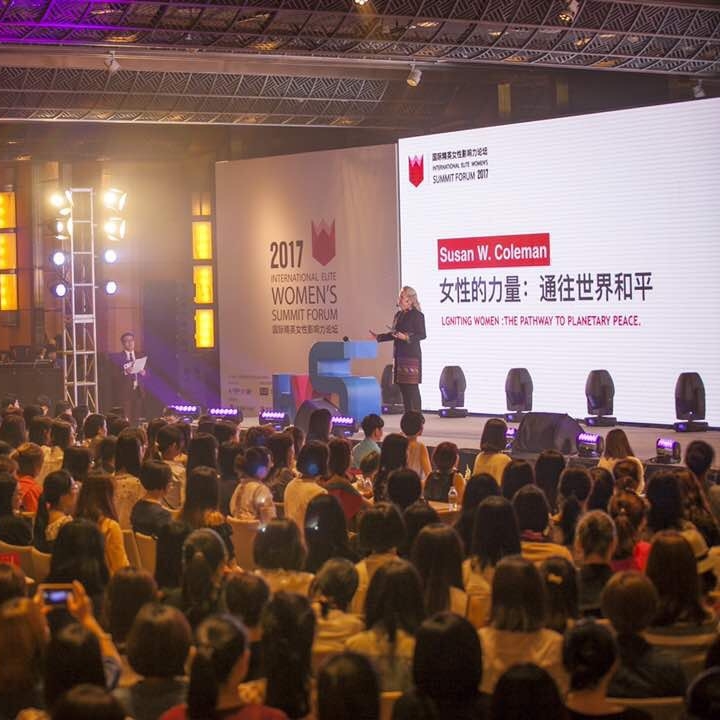
Ep. 026: Susan Coleman: Igniting Women - The Pathway to Planetary Peace
This episode is a recording of the speech Susan delivered in Shanghai on May 14, 2017 to 1000 women at the International Elite Women’s Forum — a women’s leadership and empowerment gathering. The speech was delivered in English (with direct translation into Chinese which has been cut out here for easier listening.) See below for a full transcript of the speech and go to https://www.facebook.com/thepeacebuildingpodcast/ for the presenter slides that go with the speech.
Find the transcript here.

Ep. 025: Dean Foster: Crossing Cultures
Exciting News! We have a new feel, rhythm and sound to The Peacebuilding Podcast. Please check it out in this episode.
In this next podcast conversation, Susan talks with Dean Foster whose name is synonymous with building intercultural competency. Dean has worked in almost 100 countries, has been a speaker at major business schools in the United States including Harvard and Columbia, is the host on CNN of the nationwide “Doing Business in…” series and is also a frequent guest commentator on culture, global work and social issues for global media networks.
What is culture? Who am I culturally speaking? Those are questions that are almost always salient to any conflict resolution or peacebuilding process. Groups get easily polarized around identity and culture when conflict is handled in an adversarial way. And many of the biggest conflicts on the planet today have a strong component of cultural misunderstanding. As the world get’s increasingly more-crowded, it’s important that all of us build both our ability to deal with difference in constructive ways and also our understanding of how we differ culturally speaking. Susan likes to say “culture is to a group what personality is to an individual. It’s a group’s personality, the unique way that a group has devised to deal with our common human challenge of staying alive on the planet.”
Susan caught up with Dean somewhere between a trip to Prague and New York. Early on in the interview, Dean says: “When faced with something we don’t understand or that we find mystifying, we always have a choice. We can decide to approach it as an opportunity for growth and learning. . . or we can approach it fearfully -- as something dangerous”.
Dean talks about his early “cross-cultural education” growing up in Brooklyn, New York and reflects on the shift of globalization over the last twenty-five, thirty years. The conventional wisdom in the multinational world when Coleman and Foster got started in their professional work was that we have a global multi-national culture now that transcends any individual culture. Dean says that while there is some truth to this, it is far from accurate. He sees in millennials a greater acceptance that cultural differences exist, but not necessarily a real increase in understanding about what those differences are.
Foster talks about some projects he did, supporting an American multi-national working with a Russian team, about China, and about multi-cultural teams where so much business is done these days.
Please enjoy the episode and send any feedback to susan@thepeacebuildingpodcast.com.
Find his bio and show notes here.

Ep. 024: Bob Stains: The Dialogue Approach of The Public Conversations Project
In the current political climate in the United States, there is a heightened interest in bringing people who don’t agree together for dialogue. One of the first to do this work was the Public Conversations Project (PCP)* out of Boston over the hugely contentious issue of abortion.
In the 1980’s and early 90’s, the abortion conflict got to such a feverish pitch -- allegations of “baby killers”, “woman haters” -- and resulted in the murders of two women outside an abortion clinic. In response, Laura Chasin, the founder of PCP, became the co-facilitator of a multi-year, clandestine dialogue between Boston area “pro-life” and “pro-choice” leaders, aka “The Leaders Dialogue”. In the years that followed, Laura and others applied this method, which combines aspects of family therapy, neuroscience and mediation, to a wide variety of communities and issues including same-sex marriage, immigration, gun rights, gender issues, peacebuilding, and many others.
Over the last 22 years, Bob Stains has helped build the PCP. He is a pioneer of the modern dialogue movement, a seasoned facilitator of challenging conversations about identity, religion and values and has trained over 20,000 professionals in the PCP dialogue approach known as “Reflective Structured Dialogue”.
In this episode, Bob describes the process in detail with some examples of an application in the setting of a polarized church congregation, as well as the “Family Dinner Project” and some other initiatives.
Bob shares that a “seed planted in him” to do this work was being raised by a single father which marked him as different; His teachers treated him differently, friends were not allowed to come over to his house because there was no woman present. His father did everything, the ironing the dishes which left Bob often feeling ostracized. The experience shaped his ideas about what it means to be a man and not conform to stereotypes
Bob always engaged in difference but did so more “by the seat of his pants” until he encountered the PCP. In his first PCP dialogue, an exchange with someone with polar opposite views on abortion left him amazingly uplifted and connected even though they deeply disagreed.
Bob tells the story of a church congregation that was deciding whether or not to be welcoming to openly LGBTQ people. Many people had left the congregation because of the issue but came back for the dialogue process. As a result, the congregation voted overwhelmingly to be openly accepting of LGBTQ people. The people who left re-joined because, as Bob says, they felt heard.
Bob explains, some conflicts can’t be resolved but you can have good conversations if you create the right “container.” He has come to realize that what’s most important is the relationship and how people come together, not whether the issue is resolved, especially in highly contentious issues where people are not likely to ultimately see eye to eye.
As evidence of the profound nature of the PCP work, the members of the Leaders Dialogue continue to speak in pro-life, pro-choice pairs to tell people the value of talking across the divide. Interestingly, all of them will say that their perspectives not only did not change as a result of the dialogue, but rather were enhanced. But they will also say that they have grown to deeply respect each other through the process and have developed love for each other that has kept them together.
Please tune in and get some great insights into some of the best practices to bridge the divide.
*PCP is now known as Essential Partners.
Find his bio and show notes here.

Ep. 023: Elizabeth Rabia Roberts: Bearing Witness
Elizabeth Rabia Roberts, Ed.D, is an internationally known citizen activist and women’s advocate. She is MaShieka — spiritual guide and teacher—in the International Sufi Way, and a lifelong student and teacher in nondual Buddhism. She has spent nearly 50 years working as a change agent for environmental and social justice, and the past 26 years working in 17 countries using “Bearing Witness” as a model for transformative action. Bearing Witness is a process that has grown out of the teachings and inspiration of many people (Bernie Glassman, Dr. Martin Luther King Jr., Witness for Peace, and Elias Amidon, to name a few). It has deep spiritual roots — but is being newly adapted to improve the effectiveness of working with transformative change. Rabia has slept in tents, bamboo huts, ashrams, church basements, hotels, the occasional palace, and the guest rooms of friends around the world. She describes her work as an exercise of happiness and optimism – something that you can feel palpably when talking to Rabia.
In this episode of The Peacebuilding Podcast: Bridging the Divide, Rabia shares a specific story of Bearing Witness, in a multi-party conflict playing out in the national park system between native people, environmental activists, loggers, the police and others in the then Burma where she spent many years with her husband Elias Avidon.
About the process of Bearing Witness, Rabia says, “No one person, organization, or political party holds a monopoly on what will make a healthy future for us all — either at the planetary or community level. Perhaps nothing is more important today than crossing the boundaries that seem to separate us and learn to think like an interconnected system.”
“Our challenge is to loosen our attachment to our personal or group agendas so that we can begin to sense what is trying to emerge from the larger whole. . . .”
“This does not mean we excuse greed or need to capitulate on what is true—i.e. pretend that a river is not polluted when it clearly is—but we must continue to dialogue. Future leaders will be those who have the collaborative skills and spiritual maturity to bear witness to the totality of what is.”
Rabia describes the principles of Bearing Witness as “appear(ing) quite simple—you may have heard them before from a spiritual teacher, or in your church—but like most important things in life (i.e., marriage, child rearing, committing to a spiritual path), they are not easy. Whether you work in peace building, education, community development, corporate training, or simply want to improve your family dynamics, the process of bearing witness can be helpful.
Encounter the other; show up; take the plunge
Ask caring questions that open the heart of the “other”
Practice the art of Deep Listening, without judgment
Understand techniques for setting aside one’s own beliefs and attitudes
Learn to guide meetings without driving one’s own agenda
Learn the difference between fixing, helping, and serving
See ways to bring forth the greater whole that is emerging
Perceive what is ‘yours’ to do, and when action is ready to emerge
In 1999 Rabia and her husband, sold their home and undertook a deliberate period of homelessness as part of an international pilgrimage of direct service and teaching. In 2002, while working with a peace group in Iraq, Rabia was elected the first American delegate to the Global Non-Violent Peaceforce. Since then she has worked organizing and teaching active non-violence in Burma, Indonesia, the tribal lands of Southeast Asia, Iraq, Syria, Israel/Palestine, Brazil, Afghanistan, Pakistan and most recently Standing Rock.
Please tune in to this wise soul whose upbeat spirit is simply contagious, and path of activism and adventure compelling.
Find her bio and show notes here.


Ep. 022: Sandra Janoff: Future Search to Build Common Ground
Sandra Janoff is really in a class by herself. No one that I know of has so systematically created a design for building common ground in a multi-stakeholder group than Sandra and her now retired partner, Marv Weisbord.
The Future Search process does not portend to be a conflict resolution tool, or a peacebuilding one for that matter, but it is both nonetheless.
In this episode of The Peacebuilding Podcast: Bridging the Divide, Sandra talks about the Future Search process and tells stories about its application in a community of indigenous Hawaiins, with the Children of Southern Sudan and more.
Sandra co-developed the Future Search methodology, which is a non-traditional way of doing strategic planning, because it brings stakeholders together in a setting where there is a great deal of dialogue, and the opportunity to discover a shared vision and action agenda together.
Janoff also directs the Future Search network where Future Search principles are applied in communities around the world for whatever people can afford.
The Future Search principles include: 1. Getting the whole system in the room 2. Looking at “the whole elephant” together 3. Focusing on the future and common ground as opposed to conflicts and problems and 4. Allowing the group to take responsibility. As Janoff says, her focus has always been on structure change, not behavior change. She and Marv are probably some of the first to make this important point to systems change – that getting the structures, conditions, principles right for whatever group you are working with – whether a team, family, department or whole system, is the best way to create sustainable change.
Sandra and her partner Marv have created an important legacy about how common ground can be built in spite of polarization. Both are Lifetime Achievement Award winners from the Organization Development Network. Many of the Future Searches they themselves have run around the world, or inspired, continue to make positive ripples sometimes decades after the meeting itself was convened.
As is always invited on The Peacebuilding Podcast, Sandra shares some of the “seeds” that were planted in her that inspired the work she does today -- a family setting where she often had to play the role of informal mediator. She also talks about some of her early professional years that led to her insights about the need for structural change.
This episode is replete with insight and quotable moments. To name a few that are especially relevant for these times:
“In so many places, people are building communities that are sustainable. Under the right conditions, people can build a bright future.”
“We are living under conditions of non-stop change and increasing diversity. So we must do something different – we can’t repeat old patterns and believe that things will change. People only change if they do something they haven’t done before.”
“We need new conversations and new ways of coming together.”
“When we make the circle bigger, things get better. “
Tune in now to this bright, wise soul and learn some important ways and ideas to take this planet higher.
Find her bio and show notes here.

Ep. 021: Thomas Hill: Peacebuilding in Iraq & Creating NYU’s Peacebuilding Program
How do you create the conditions for peacefulness in a place like Iraq that has been in such intense, destructive conflict for so long? How do you use yourself as an outsider to support people on the ground who wish to create a different kind of future for their children? And how do you go about setting up academic programs, in war-torn countries or peaceful ones, that rigorously train students in the best methods for creating the conditions for peacefulness?
Thomas Hill speaks to all of these questions on this episode of The Peacebuilding Podcast: Bridging the Divide. With his mellifluous voice (that this podcaster believes should be put to use on radio), Tom talks about his near singular focus on Iraq over 16 years and 35 trips.
Tom, aka Dr. Hill, is a clinical associate professor at the Center for Global Affairs at New York University’s School of Professional Studies, where he is the Director of the Initiative for Peacebuilding through Education. He is a peacebuilding practitioner, researcher and has developed a series of inter-related projects focused on increasing levels of peacefulness in Iraq.
Tom talks about his journey into the peacebuilding field through journalism as well as his creation of NYU’s Peacebuilding concentration. He reflects on the changing perceptions about the Peacebuilding field from those who still think it’s a 1960’s holdout, to those who now accept it as becoming mainstream e.g. the U.S. State Department. He describes why students come to the NYU program, what they learn, and what they do when they leave.
Most importantly, Tom talks in great detail about the his work in Iraq over the last 16 years and how he and Iraqi partners have gradually created academic but activist conflict resolution centers that are ground zero for those who are done with the destruction around them, and 100% committed to finding a different path.
With poignant clarity, he shares his first moments in Iraq in 2003, enjoying beautiful food and wonderful Iraqi hospitality in a home with a kalashnikov leaning against every window, dark moments over the years turning into brighter ones, the serendipity of the worst events like ISIL taking over Mosul being the impetus for the University of Mosul to consider development of a program in peace studies.
In keeping with the theme of those interviewed on The Peacebuilding Podcast, Tom talks about the structural or systemic changes that are necessary, in Iraq, the United States and elsewhere, for peacefulness to really take hold. He gives listeners his top three insights and learnings from the work in Iraq, his favorite book on building peace, and the tool or technique from Bill Ury that he has found most useful overall.
If you are someone who is tired of our public conversation that is dominated by destructive, violent conflict and are thinking about how peace really can be built, listen to this creative, upbeat voice and become inspired about lessons you can immediately put to work!
Find his bio and show notes here.
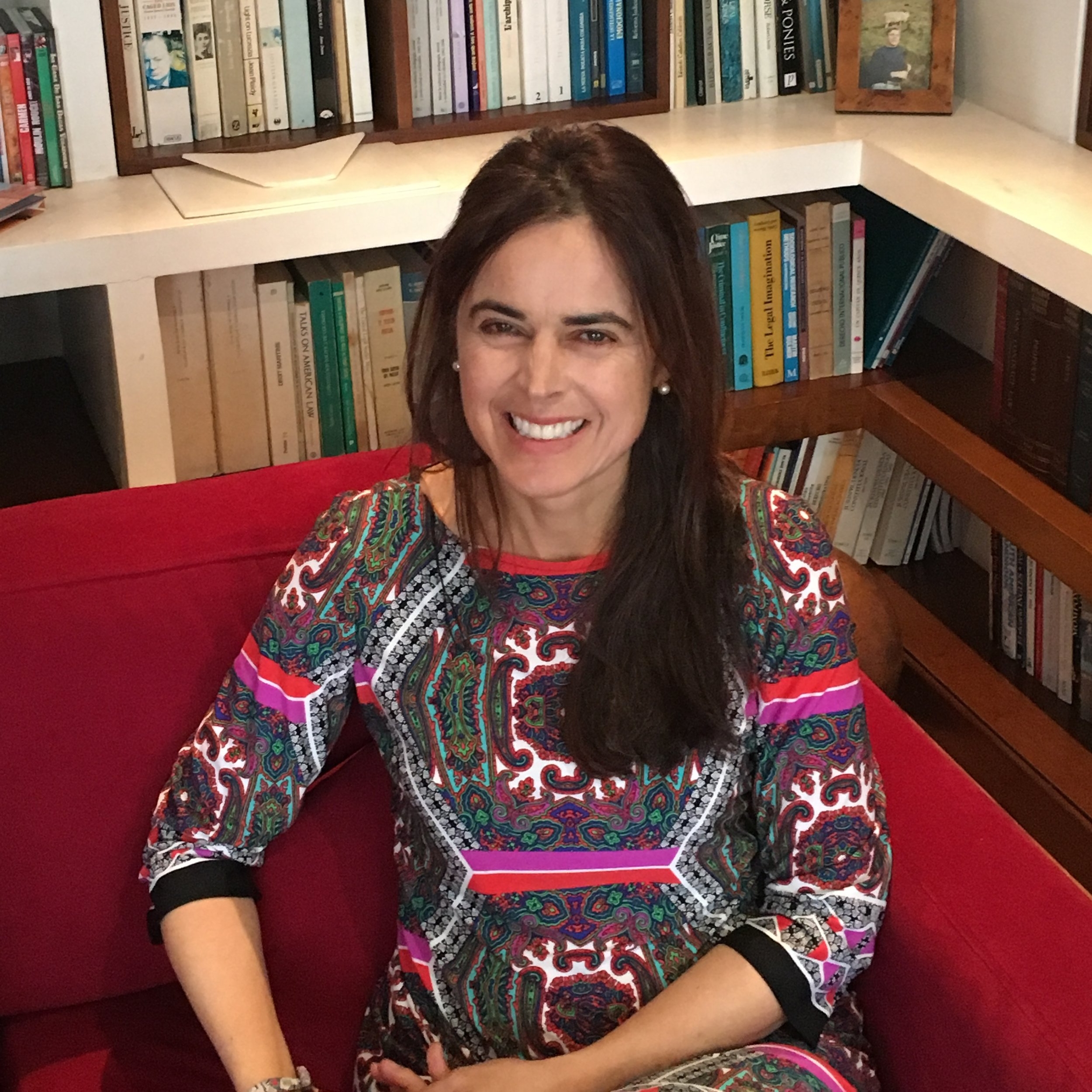
Ep. 020: Elvira Maria Restrepo: A WebApp for Building Peace in Colombia
Are there ways to use technology to build peace? How much is misinformation from social media impacting an electorates’ thinking about what they want? Is it possible to create an online process of deliberative democracy to allow citizens to freely express their views and arrive at outcomes that are more closely aligned with fact and the public good? Can you bring people together online in conversation from opposite ends of the political spectrum to have constructive dialogue about issues that affect everyone?
In this episode, Susan interviews Elvira Maria Restrepo, University of Miami Professor and special advisor to President Santos on the peace building process in Colombia.
Elvira talks about her personal journey and the influence on her of growing up in a country that has been at war for her entire lifetime, from the period of La Violencia, through the more recent conflicts between the government, the paramilitaries and the FARC, to the historic signing of a peace accord this last year.
She talks about how the Colombian experience has formed her understanding of the need for social inclusion and justice as the underpinnings of building peace.
She then goes into describing a super interesting experiment that she is spearheading to use an WebApp for citizen engagement around the peace process in Colombia. She and her team have been studying the impact of social media on citizen awareness and social division. Misinformation generated from social media, especially Facebook, has had a huge impact on the outcomes of the peace referendum in Colombia as with Brexit, the Trump election in the U.S. and elsewhere. The App is an attempt to engage Colombians in a non-partisan debate to create a more informed citizenry and build common ground around the peace process, which is a hugely polarized topic.
The App is based on the theory of deliberative democracy that has been applied in many parts of Europe and North America around many types of social issues. However, it is the first time an App of its sort has been created and applied to a conflict situation of this sort.
In spite of the fact that you can’t reach many parts of Colombia by road, more than 50 % of Colombians have access to the internet and 80% of those go on line via Facebook. The way the App works is “players” are grouped in diverse pods of 5 who think differently from each other on an issue. The idea is that through deliberation, dialogue the group will not necessarily reach consensus but rather the best conclusion for all (i.e. the public good) and greater understanding of different perspectives. So far, the testing with 100 individuals has shown an important trend to depolarize the extreme positions which is the expected outcome of deliberation. Topics can include land, system of justice for ex-combatants, tax issues, gender relations and can bring together in conversations diverse perspectives such as bankers and house cleaners.
The link to the App can be accessed here if you are interested in participating and can speak Spanish. Webapp Atrévete atrevete.co/rc/. All feedback is welcome as the technology is tested.
This episode is sure to engage your thinking about creative ways to bring people together across the divides of difference. And, of course, the possibilities for scaling in other contexts around the world are endless.
Elvira's latest publication in the Perspectives on Global Development and Technology (PGDT) is entitled Online Technology as a Pathway for Citizen Deliberation and Depolarization and you can read it by clicking on the link.
Find her bio and show notes here.
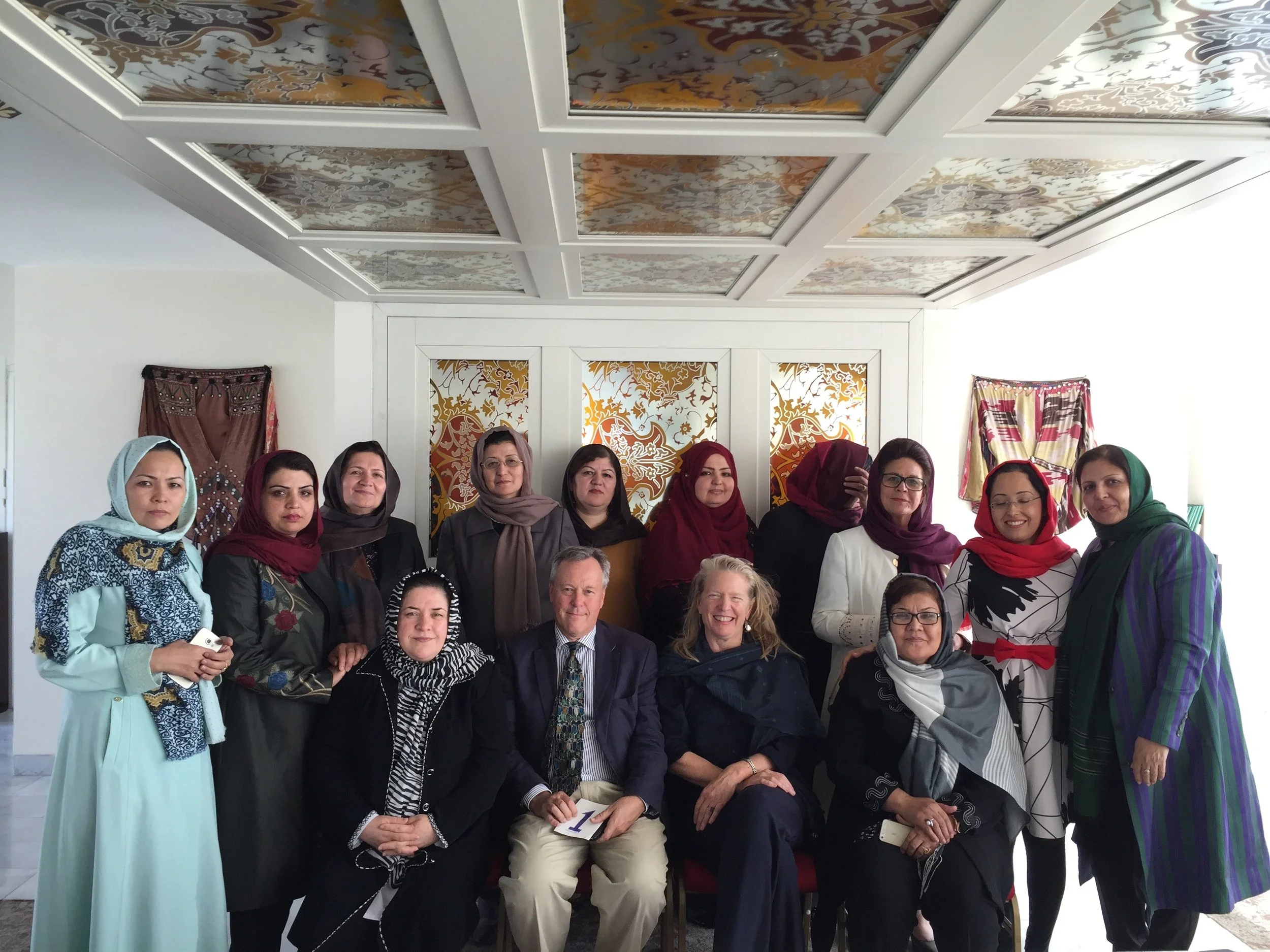
Ep. 019: Susan Coleman: Working with Senior Women’s Leadership Teams to Build Peace in Afghanistan
Is empowering women, especially in conflict-ridden societies a peacebuilding initiative? Can developing collective leadership among women, especially at senior levels in governments, be an important way to move towards a more peaceful and collaborative world? Coleman believes the answer to these questions is yes and that women’s leadership and empowerment is perhaps one of the most important peacebuilding initiatives we can undertake on the planet today.
In this cross-post from the Team Coaching Zone Podcast, Dr. Krister Lowe interviews Coleman about her professional journey through the fields of commercial litigation to discovering the world of integrative negotiation at the Program on Negotiation at Harvard, to pioneering work in the field of intercultural negotiation and conflict resolution training at the United Nations and Columbia University, to her present focus as global coach, mediator, public speaker and Host of this Podcast. Coleman shares details of her recent experience working with the most senior women in the Afghan government, a project sponsored by the Office of the First Lady of Afghanistan and UN Women Afghanistan. She describes the difficulties of working in a war zone, the powerful inspiration of the Afghan women with whom she worked, as well as the intervention design and program. Coleman’s professional focus includes women’s leadership development, coaching and mediation of senior teams, large group facilitation and collaborative negotiation skill development. The Afghanistan work blended all of these as is elaborated upon in this podcast.