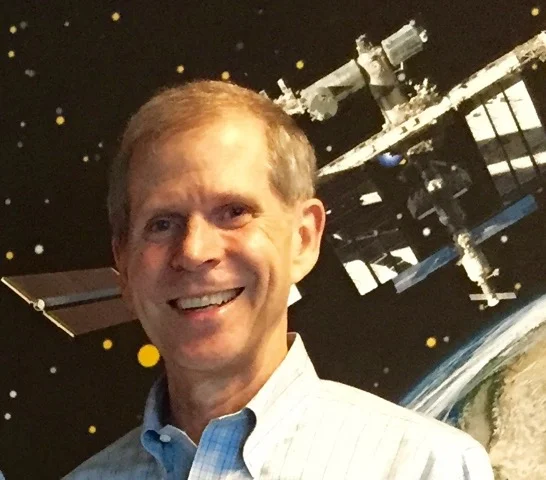
Ep. 018: Jim Zimmerman, NASA: Space Exploration: A Powerful Symbol of Global Cooperation
In this episode, Susan interviews James Zimmerman (“Jim”), a retired National Aeronautics and Space Administration (NASA) official, who describes space exploration as a case study for international cooperation. Jim recounts the history of space exploration as a tale of competition evolving to cooperation. Currently, the International Space Station, circling 250 miles above the earth’s surface, is a beautiful metaphor for what we can create when we tap into the exponential potential of cooperation among countries.
Jim talks about his personal journey and how he came to work in the field of international relations, then with NASA and his tenure as President of the International Astronautical Federation (the “IAF”), an international organization based in Paris whose members include space agencies, companies and professional societies.
Jim describes how space exploration is a relatively new phenomena which began in the 1950’s during the Cold War and the competition between the then Soviet Union and the United States. The seeds that nurtured space activities in that era “not collaborative at all, they were political, competitive and focusing on which political system could produce the best types of results.” Over the years the paradigm has shifted from nationalism and competition, to an environment where scientists and engineers realize that collaboration is not just an option, but the best way forward given the limitations of financial and human resources. The partnerships have been successful in spite of the fact that the technologies they are using sometimes have both military and civil uses and therefor are restrticted.
Jim talks about the value of the IAF, with more than 300 member organizations including most of the global space program stakeholders who meet annually. The IAF was founded in 1951 as a non-governmental organization to establish a dialogue between engineers and scientists around the world and to lay the foundation for international space cooperation. During the Cold War, it was one of the few places that space officials from the Soviet Union and the western countries could actually talk to each other informally without political constraints. The organization continues to offer that opportunity for informal exchanges with colleagues from China. What’s especially exciting to Jim is how many younger people now participate in the IAF with over 1/3 of its participants being under 35 – a dramatic change that bodes well for space collaboration and for peaceful collaboration in a very challenging and complex field.
Jim tells some wonderful stories about the important lessons he learned about intercultural negotiations and the need for respecting people from other parts of the world, cultural differences, listening and understanding different perspectives. How do you move forward when your partners are Russian, Japanese, European, Chinese, Indian, South American and you must build consensus?
Jim’s final reflections are about how space is a unique place to invest in a peaceful future. For the relatively small cost we pay in each of our countries, space exploration brings out the best in humanity.
p.s. My apologies for mis-pronouncing Carl Sagan’s name.
Find his bio and show notes here.

Ep. 017: Kamal Mouzawak: Making Food Not War in Lebanon
In this episode, Susan interviews Kamal Mouzawak, an Arab world social innovator whose business card says it all “Make Food, Not War”.
Kamal created the first farmer’s market in Beirut, Soukeltayeb.com, which means the market of good. Because he grew up in the middle of the Lebanese civil war, he knows first hand about what kinds of actions can build peace.
Susan and Kamal met sometime in the Spring of 2016 at the Glynwood Center, glynwood.org, which supports food and agriculture throughout the Hudson Valley of New York in the United States.
Kamal and his staff served an amazing meal of goat, hummus, greens, yogurts and more while talking about his work of bringing people together across huge divides in Lebanon of different cultures and religions. As he has said, “in a country as divided as Lebanon, nothing can bring people together as much as the land and food.”
In the midst of divisive political tensions still prevalent after the Lebanese civil war (1975 to 1990) and continuing conflict between Lebanon and Israel, Kamal began Souk el-Tayeb. Souk el-Tayeb is the first inexpensive organic food market in Beirut, but more importantly, it serves as a platform for the people of Lebanon to forge a unified Lebanese heritage and identity based on their shared cuisine. A place where regardless of the religion or ethnic heritage—Druze, Shiite, Sunni, Maronite, Greek Orthodox, Jew—the diverse peoples of Lebanon are united around a food experience.
Lebanon’s tumultuous history of diversity and conflict has resulted in low agricultural production, massive internal migration, inadequate agriculture policies, and ethnic divisions. For each of these problems, Kamal’s approach is part of a solution. Branching from Souk el-Tayeb, Kamal has begun a farmer visit and exchange program, a cultural tourism program, a producer restaurant, educational programming for youth, and inclusive national festivals to promote reconciliation in Lebanon. While Souk el-Tayeb is based in Beirut, due to Lebanon’s compact size, farmers from the Niha Mountains to costal Saida can join together at weekly farmer’s markets. Additional programs branching from the market, such as the farmer’s exchange program, also connect farmers from across Lebanon in their own homes, and transnationally with investor networks in London, Galway, Amsterdam, New York, and Latakia. Based on the marked success of Souk el-Tayeb in Beirut, and the impact of its related initiatives in other parts of Lebanon, Kamal is working to introduce producers’ restaurants in Dubai and farmers’ platforms in Saudi Arabia. Using cuisine traditions and customs as a unifying social and cultural catalyst while also empowering and generating income to small-scale farmers and local communities—through food, Kamal is scaling peace in the Middle East.
Find his bio and show notes here.

Ep. 016: David Gage: Mediating Business Partner Disputes, and the Partnership Charter
In this episode, Susan interviews Dr. David Gage, a clinical psychologist, business mediator, entrepreneur and author. Twenty-five years ago, David founded what is still one of the only multidisciplinary mediation firms in the country that specializes in resolving conflicts among co-owners of businesses. Family and non-family closely held businesses make up the vast majority of the businesses globally, but until David wrote his book on partners, there was nothing written on the whole range of discussions, negotiations and agreements people need to have in order to lower the risks inherent in having partners. From resolving partner conflicts, David moved into conflict prevention with the publication of his book, The Partnership Charter: How To Start Out Right with Your New Business Partnership (or Fix the One You’re In). The Partnership Charter Workbook, based on the book, helps potential and existing partners plan their partnerships thoroughly, improve collaboration and reduce the risk of conflict.
In this episode, David describes how and why he founded his firm, gives some useful background on closely-held companies, and explains why mediation is such a perfect approach to resolve partner disputes. He also describes the Partnership Charter process, a kind of “collaborative pre-nup” for co-owners. With over two decades of resolving and preventing business partner disputes, David may be the most knowledgeable person on the planet on how to reduce conflict and promote collaboration in this niche population that controls so much of our global economic activity. If you are a mediator or someone who works in a co-owned business, this will be 45 minutes very well spent.
Find his bio and show notes here.

Ep. 015: Andrea Bartoli: “Seek What Unites, Not What Divides”.
In this episode, Susan interviews Dr. Andrea Bartoli, someone who takes important professional risks to get good work done. Dr. Bartoli is currently Dean at Seton Hall School of Diplomacy and International Relations and an incredibly brave, intelligent and collaborative soul. He has been part of peacemaking initiatives in Mozambique, Guatemala, Algeria, Kosovo, Burundi, Democratic Republic of the Congo, Burma/Myanmar, East Timor, Colombia, and has been an advocate of innovative processes to build common ground in the university systems in which he has spent most of his professional career.
In this podcast, he tells the story of his contribution in Mozambique to bring about the end of a 16-year civil war. This work, he says, was the most important and formative of his long career in the field of peacemaking. Instrumental to the success of the endeavor was a strong belief that, in spite of the huge challenges, peace was possible. As Dr. Bartoli says, “Peace is always possible. This must be repeated over and over in situations where you do not see the possibility of peace. . .If peace was possible in Mozambique, then it is possible in Syria, Afghanistan, it is possible everywhere.”
The story of Mozambique started simply – giving assistance to just one friend. That friend, in turn was connected to expanding systems of people, ultimately to an entire country and then, by way of example, to the world. Dr. Bartoli reflects how “each of us has a daily decision to make regarding how we use ourselves to evolve systems to a more harmonious and constructive place.” And, he says, “I think that the human spirit is much stronger than war, much stronger than violence. I think that violence and war are mistakes, collective mistakes, of not applying yourself to the discipline of seeking what unites and not what divides.”
Towards the end of the interview, Dr Bartoli talks about the importance of innovative process choice in peacemaking and diplomacy and, similarly, in the “diplomacy” required to run large complex systems such as universities.
There is a lot of learning in this episode. You many want to listen closely, and listen twice.
Find his bio and show notes here.
Ep. 014: Aldo Civico: Working in the Fire
In this episode, Susan interviews Aldo Civico, cease-fire negotiator, peacebuilder and, in the words of George Mitchell, “one of the most innovative leaders in the field of conflict resolution. Aldo talks about how his Austrian grandfather, a resistance fighter against Hitler during WWII, planted the seeds in him to do this work – a man who lived for something bigger than himself. He recounts his professional journey of being inspired by life coach Tony Robbins particularly Robbins’ work with a live conflict on 9/11 using tools such as performance psychology, neurolinguistic programming (NLP), etc. In that experience, Aldo realized that the “Getting to Yes” and conflict resolution frameworks could be radically deepened to create lasting shifts for his clients by incorporating more of these kinds of tools.
Aldo shares with humility one of his early stories of traveling to a warzone in Colombia with the mind-set of “expert” from New York and realizing that he had to throw away all of his notes, re-connect to his purpose of service and listen deeply to the group he was working with. His tale is a great one of adapting quickly to the power of storytelling and simply staying with participants — with deep listening, no agenda or manipulation –to allow the power of story to unfold.
Aldo shares his experience in building rapport with perpetrators of some very dark crimes and understanding how the capacity for violence lives in all of us. He also talks about the need to change the landscape and narrative from “let’s get ISIS” and shares a beautiful image of a young German pianist whose response to the recent violence in Paris was to put his piano on a truck and travel overnight to play Lennon’s “Imagine” for an outdoor audience.
He talks about his vision of the future of conflict resolution work and how building capacity in urban communities to live conflict resolution principles will probably have maximum impact.
There is a lot of learning in this episode. You many want to listen closely, and listen twice.
Find his bio and show notes here.

Ep. 013: Harrison Owen: Opening Space for Peace and High Performance
In this episode, Susan interviews Harrison Owen the celebrated creator of Open Space Technology which was “channeled” through him, he claims, because of the presence of good gin as well as past inspirations from a village where he lived in West Africa that handled differences by sitting in a simple circle. Open Space has been used in more than half of the countries on earth in what has been a 30+ year experiment in what Harrison observes as the “natural occurrence of peace and high performance.” In this episode, Harrison talks about how Open space evolved and why he thinks it works in high conflict situations. He describes some specific applications – the first, to a conflict between government agencies and Native Americans about where to build a highway on tribal lands and, the second, a meeting of 50 Israelis and Palestinians in Rome who were at polarized odds. “One of the interesting things that struck me early on (about Open Space) is how hugely conflicting people who had spent a considerable amount of time trying to deal with a particular issue would, for whatever reason, find themselves in an Open Space and, more often than not, come out hugging and kissing – problem solved.” In his typical fashion, Harrison provides insight in just about every sentence he utters including reflections on why Open Space isn’t used even more widely than it is given its consistent effectiveness.
Find his bio and show notes here.

Ep. 012: Gabrielle Kluck: Ombudsing In UN Peacekeeping Missions in the Sudan Region
Gabrielle Kluck is now the Ombudsman for the UN’s World Food Programme in Rome. I caught up with her in this episode as she was winding down her tenure Ombudsing in the Sudan Region of Africa. Gabrielle gives a first-hand account of working in the pressure-cooker of war-torn peacekeeping operations in S. Sudan, Darfur and earlier in Kosovo. She provides a vivid account of the context of hardship duty stations and then tells a story of working a conflict between an international and national staff to engage parallel issues at the group and systemic level. She also shares generally the ways her work builds collaboration internally in order to more effectively build an external peace in the region.
Find her bio and show notes here.
Ep. 011: Mel Duncan: “Third Side” Interventions into the Heart of Deadly Conflict
In this episode, Susan interviews Mel Duncan, the Founding Director and Director of Advocacy and Outreach of Nonviolent Peace Force (NP) which provides unarmed civilian protection in the world’s most deadliest of conflicts. In this moving account of the power of “the third side”, Mel talks about those who put themselves in harms way, both nationals and internationals, in conflicts in S. Sudan, Colombia, the Philippines and elsewhere. Mel also talks about how 90% of current victims of current warfare are women and children. Rape, for instance, has become a central strategy of most violent conflict today and NP has tremendous success in stopping further atrocities as Mel describes. He reflects on the origins of NP, as well as his own life path to begin this work when first challenged by a Sufi teacher to “enter the heart of his enemy and work from a place of unity”. He was then further inspired to continue by his stay with Thich Nat Hahn at Plum Village in Southern France.
Find his bio and show notes here.

Ep. 010: John Horgan: The End of War
In this episode, Susan interviews longtime Scientific American writer John Horgan who, drawing from the scientific evidence, counters the conventional wisdom that war is inevitable. John summarizes many of the points in his book that support the conclusion that, biologically speaking, we are just as likely to be peaceful as violent. War is not preordained, and furthermore, it should be thought of as a solvable, scientific problem. John summarizes what we know about human history – that the evidence of violent conflict between humans is just not there for 99% of human history. He makes a strong case for why we should be optimistic that ending war is attainable and what we might focus on to make that happen.
Find his bio and show notes here.
Ep. 009: Loretta Raider: Interventions to Quell Election-Related Violence in Sierra Leone
Susan interviews Loretta Raider, a seasoned practitioner of organization development, conflict resolution and large group processes. In response to severe election-related violence, Loretta gives a detailed account of a multi-faceted approach to working throughout Sierra Leone using parts of Future Search, Open Space, conflict resolution and other methodologies to pre-empt future violence. Subsequent elections were peaceful and, while it is hard to be sure of the reasons, it is easy to assume that Loretta and her partners’ work contributed to that outcome. Loretta also talks about more recent initiatives to build positive change and peace in communities throughout Sierra Leone during the Ebola crisis and recovery period.
Find her bio and show notes here.
Ep. 008: Zachary Metz: Peace Writ Large, Peace Writ Small
In this episode, Zach describes his extensive experience in different conflict-affected societies from Iraq to East Timor. Our conversation focuses on the conventional wisdom in the field that interventions must be systemic – “peace writ large” – if they are to be effective, and contrasts that thinking with the question of whether smaller initiatives – “peace writ small” -- can make a profound difference, particularly in pervasive, intractable conflict. Zach tells a specific and very moving anecdote about an event in 2005 Iraq in which a single intense interchange between participants embodied many of the identity group tensions in the war-torn country, while shifting the group to a different and much more cohesive place.
Find his bio and show notes here.
Ep. 007: Gay Rosenblum-Kumar: An Insider’s View of the Evolution of UN Peacebuilding Initiatives
Susan interviews Gay Rosenblum –Kumar, a seasoned United Nations veteran, about her early career as a U.N. peace observer in South Africa and her later initiatives to co-develop the U.N.’s system of Peace Development Advisors (PDA’s). She provides examples of PDA initiatives in Ghana and Guyana, offers keen insight into the evolution of the peacebuilding field inside the U.N., and talks briefly about her most recent work with GAAMAC on genocide prevention.
Find her bio and show notes here.
Ep. 006: Ava Bynum: Sowing the Seeds of Peace in Public Schools
Join host Susan Coleman as she interviews Ava Bynum, the 23 year-old Executive Director of Hudson Valley Seed (and Coleman’s daughter). Ava talks about what kids learn when they build gardens and grow vegetables – skills like cooperation, patience and an understanding of the natural processes of life that nurture peace. Bynum also talks about how school gardens can be a focal point for collaboration and building communities beyond the classroom.
Find her bio and show notes here.
Ep. 005: Krister Lowe: Peacebuilding Approaches, Training to Team Coaching
Join Susan Coleman as she interviews Krister Lowe, an organizational psychologist, Leadership and Team Coach, and the Creator of the Team Coaching Zone podcast. In this episode, Krister talks about his journey from early peacebuilding and global conflict resolution training interventions to the decision to focus on team coaching as a methodology to create scalable collaborative systems change.
Find his bio and show notes here.
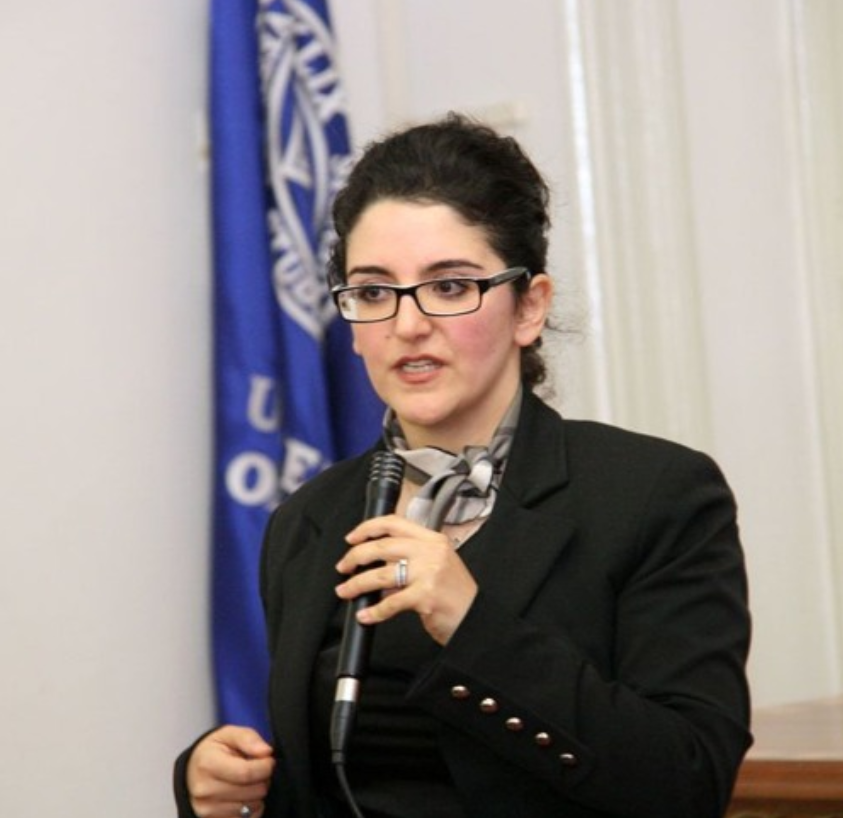
Ep. 004: Naghmeh Sobhani : Peacebuilding Through Education in Bosnia and Herzegovina
Join global consultant and host, Susan Coleman, as she talks with Naghmeh Sobhani about a 15 year program Naghmeh ran in post-conflict Bosnia to build peace through education. Naghmeh is a collaborative negotiation, post-conflict peacebuilding and conflict prevention consultant with expertise in developing and monitoring large-scale initiatives especially within fragile, divided zones.
Find her bio and show notes here.
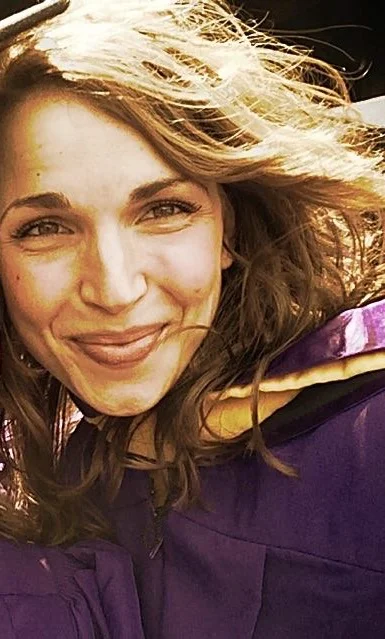
Ep. 003: Lindsay Cornelio: Peacebuilding in Bushwick, Brooklyn, New York City
Join Global Coach and Mediator, Susan Coleman and special guest Peacebuilder, Lindsay Cornelio, as Lindsay describes her master’s degree program in Peacemaking and Peacebuilding at New York University Global Affairs program and her subsequent application to a local peacebuilding initiative in Bushwick Brooklyn.
Lindsay’s Professional Statement
Lindsay Cornelio recently completed a master’s degree in Peacemaking and Peacebuilding at New York University, where she conducted original research on peacebuilding and positive psychology. She was previously an English teacher in Argentina and Chile. She is currently focused on human rights and community building in Bushwick, Brooklyn where she lives.